The Definitive Timeline of the LeBron James Steroids Controversy
In the history of the NBA, Father Time has remained undefeated. That is, until now. At age 41, playing in his 23rd season (2025-2026), LeBron James is performing with a metabolic burst that defies established physiology. While legends like Dirk Nowitzki and Kobe Bryant spent their final years battling steep statistical decline, James is averaging 22.0 points per game while playing nearly 33 minutes a night. To the casual fan, it is a miracle of genetics and a reported $1.5 million annual body-care budget. But to a growing chorus of skeptics, the the LeBron James steroids conversation is no longer “hater fiction”—it is a documented investigation of physical anomalies and unsealed federal files.
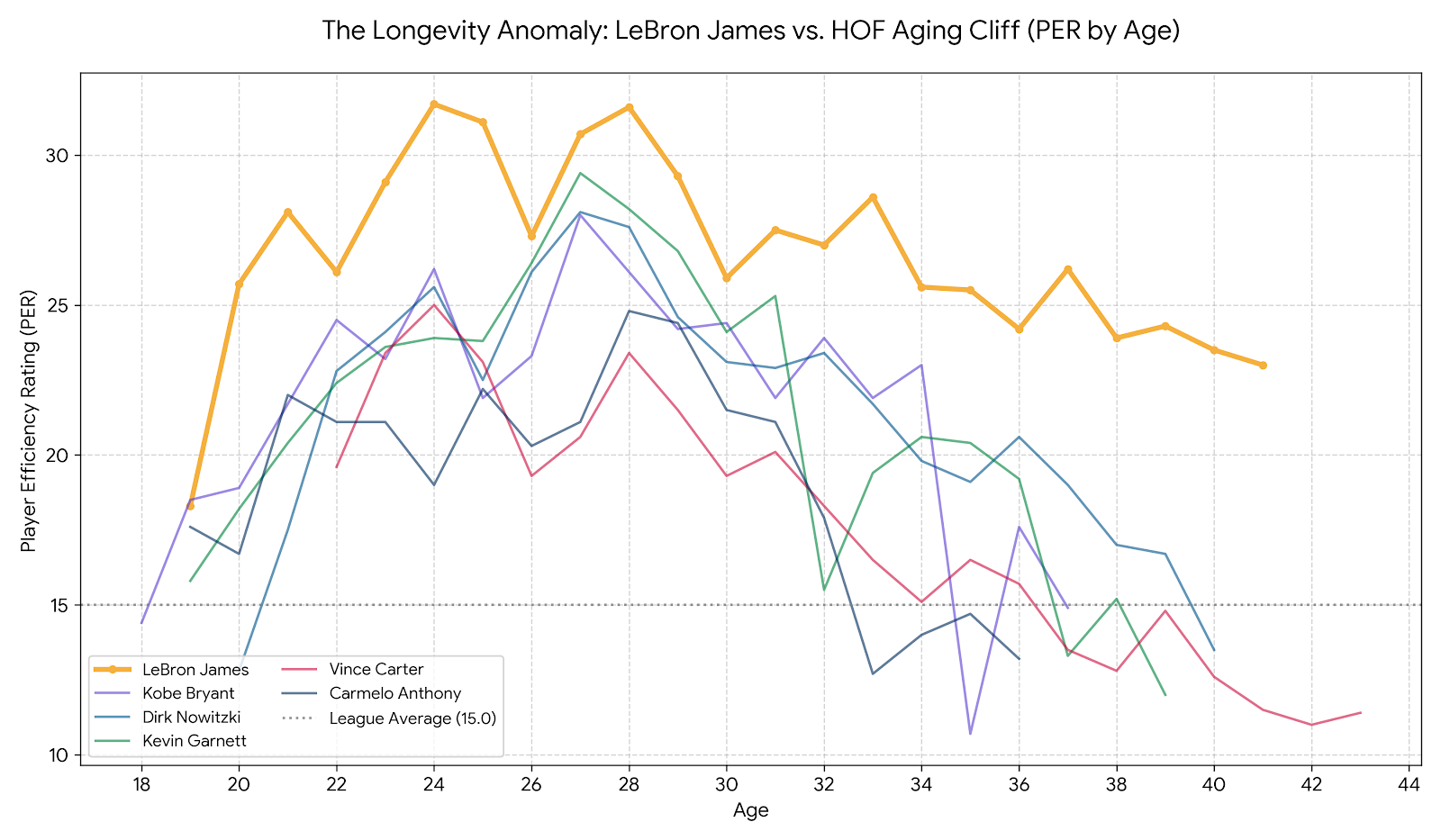
Is this the greatest athletic outlier in human history, or the result of a “shadow” regimen that has stayed one step ahead of NBA drug testing? To find the answer, we must examine the complete Lebron PEDs timeline, from the 2009 medical scares to the unsealed DEA files of 2023.
The Jaw Surgery and Early HGH Rumors (2009)
Before the championships in Miami, a medical scare birthed the first major LeBron HGH theory. In 2009, James underwent a five-hour surgery to remove a benign tumor from his parotid gland.
- The Theory: Critics point to medical literature noting that Human Growth Hormone (HGH) can cause hypertrophy of internal organs and glands, including the parotid.
- The Speculation: While parotid tumors occur naturally, skeptics argue the timing—as James entered his physical prime—was a physiological warning shot.
Lebron’s Miami Weight Gain (2010)
When James arrived in South Beach in 2010, he didn’t just change jerseys; he changed shapes. The “Cleveland LeBron” was a sleek, aerial slasher listed at 250 lbs. The “Miami LeBron” was a tank.
James moved to the Power Forward position, debuting a physique defined by significantly larger deltoids and a thicker neck. While his listed weight remained “250 lbs,” insiders whispered he was playing closer to 270 or 280 lbs of solid muscle. This sudden thickening, occurring shortly after the “warning shot” surgery, fueled the LeBron James steroids speculation.
The Anomaly: “7 Pounds in a Game” The most baffling data point comes from ESPN insider Brian Windhorst. In a 2018 profile, Windhorst revealed that during a Miami Heat playoff game, James reportedly gained weight.
“Some Miami Heat teammates saw the scale and attest to it in amazement. James himself just shrugs and calls it ‘weird as hell.’ The truly wild part is that it was from 271 pounds to 278 pounds.” — Brian Windhorst, ESPN.
Gaining seven pounds of mass while burning 3,000+ calories is biologically impossible under normal circumstances. For skeptics, this wasn’t just a “weird” anecdote; it was evidence of a body retaining water and mass in a way that aligns with the side effects of performance compounds misfiring in real-time.
The LeBron Biogenesis Connection (2012-2013)
If the 2010 “Decision” made LeBron the villain of the NBA, the 2013 Biogenesis scandal had the potential to make him its biggest casualty. While the world watched Major League Baseball stars fall one by one, a much quieter, high-stakes game of “connect the dots” was being played in Miami—one that stopped just inches from the King’s throne.
What Was the Biogenesis Clinic?
On January 29, 2013, the Miami New Times dropped a nuclear bomb on the sports world. Their exposé detailed the inner workings of Biogenesis of America, a Coral Gables anti-aging clinic run by a fake doctor named Tony Bosch. The clinic’s records, leaked by a disgruntled employee named Porter Fischer, revealed a “who’s who” of MLB superstars purchasing HGH, testosterone lozenges, and sophisticated injectable cocktails.
The headlines were dominated by Alex Rodriguez and Ryan Braun. But in the background, investigative journalists and federal agents noticed an uncomfortable geographic overlap. The clinic was located just minutes from the Miami Heat’s arena, and Bosch’s clientele wasn’t limited to baseball diamonds. This proximity birthed the LeBron Biogenesis theory: that the NBA’s biggest star was operating in the same neighborhood as the world’s most notorious PED supplier.
The “L.J.” Package and the “Juliet” Code Name Theories
As the DEA launched “Operation Strikeout,” whispers of an NBA connection began to circulate. The loudest came from Victor Conte, the infamous founder of BALCO, the laboratory at the center of the early 2000s steroids scandal that ensnared superstars like Barry Bonds. In interviews, Conte amplified a specific allegation from the whistleblower Porter Fischer: that among the thousands of documents, there were notes regarding a monthly pickup for a package simply labeled with the initials “L.J.”
According to the allegation, this individual did not come into the clinic personally. Instead, intermediaries—often described in the files as “associates” or “cousins”—would collect the goods.
- The Rumor: Internet sleuths seized on the “L.J.” initials, theorizing they stood for LeBron James.
- The “Juliet” Code: Deeper in the redacted files, another theory took root regarding a high-profile client code-named “Juliet.” In the shadowy world of PEDs, VIPs often used pseudonyms (A-Rod used “Cacique”). The “Juliet” theory posited that this code name protected a figure too big to fail.
While these links remained unverified rumors in 2013, they laid the foundation for the explosive revelations that would surface a decade later regarding James’s inner circle.
The Sabbatical: A Critical Gap in the NBA Drug Testing Policy (2015)
The 2014-2015 season represents the most scrutinized window in James’s physical timeline. It marks the only period in his career where he appeared visibly mortal—only to disappear for two weeks and return with a renewed physicality just months before the league closed a major testing loophole.
The Two-Week Miami Trip and Physical Rejuvenation
After returning to Cleveland in 2014, James underwent a startling “slim down,” shedding roughly 15 pounds on a strict 67-day Paleo diet. Critics theorized this was a strategic “cycling off” period to avoid scrutiny amidst the intensifying Biogenesis fallout.
The result was a sluggish start; for the first time in a decade, James lacked his signature explosiveness. He was seen lying on the floor during timeouts to manage back pain—a sight Brian Windhorst compared to the late-career physical collapses of Larry Bird and Steve Nash. By late December, the Cavaliers had spiraled to a 19-20 record.
On December 30, 2014, James was ruled out indefinitely with “left knee and low back strains.” Instead of rehabbing with team doctors in Cleveland, he flew to Miami for a two-week “sabbatical.” While the official narrative cited “warmer weather” as the cure, James was reportedly seen training with his South Beach inner circle, including David Alexander and Ed Downs.
The Return: “Refreshment” and the Classic Level of Play
When he returned on January 13 against the Phoenix Suns, the transformation was immediate. He was visibly thicker, his shoulders were fuller, and his vertical “pop” had been restored. The turnaround was so drastic that Bill Simmons and Zach Lowe famously danced around the topic on The Grantland Basketball Hour.
Lowe: “LeBron, since his two-week—we gotta figure out a name for that. His two-week… I don’t know what…” Simmons: “Oh, I can… I have a couple titles that I’m not gonna say, but…” Lowe: “His two-week ‘refreshment,’ or something… has been—” Simmons: “Yeah, ‘refreshment’ is kind of hinting toward… yeah. I’m not going anywhere either. I’m just listening to you.”
Simmons later noted that James’s “classic level of play” following the break suggested a recovery that defied the standard aging curve of a player with 40,000+ career minutes.
The “HGH Loophole” Before the 2015-16 Season
The context that makes this sabbatical controversial lies in the NBA’s drug-testing evolution. Crucially, during the entire 2014-2015 season, the league did not yet blood test for Human Growth Hormone (HGH).
This created a massive blind spot. While the common query “does the NBA test for steroids” usually yields a “yes,” the reality is nuanced:
- The Loophole: Prior to 2015, the league relied solely on urine testing, which is biologically incapable of detecting HGH.
- The Timeline: It wasn’t until April 16, 2015, that the NBA and NBPA finally announced that HGH blood testing would commence.
- The Effective Date: Testing only officially began at the start of 2015 training camps.
This means James’s mid-season rejuvenation trip occurred during the final window of the “Wild West” era. It was the last season an elite athlete could theoretically utilize HGH for recovery without the risk of a blood-draw catching the synthetic growth factors in their system.
For skeptics, the timeline is too precise: a physical breakdown in November, a strategic retreat to a safe haven (Miami) in January, and a miraculous recovery that fueled a run to the NBA Finals—all executed just months before the window for “undetectable” assistance slammed shut forever.
Operation Strikeout: The DEA Files & Randy Mims (2023)
For a decade, the whispers connecting James to the Biogenesis scandal were dismissed as “hater fiction.” The dots were there—the Miami geography, the physical transformation—but there was no paper trail. That changed in September 2023, when the release of 1,400 pages of unredacted federal files turned conspiracy theories into a documented LeBron James PED investigation.
Unredacted Documents: The “Inner Circle” Exposed
On September 13, 2023, ESPN investigative journalist Mike Fish published a report based on confidential DEA documents from “Operation Strikeout.” The files revealed that the clinic’s tentacles were deeply entangled with LeBron’s personal payroll through two primary figures:
-
- Ernest “Randy” Mims: James’s childhood best friend and the Lakers’ “Executive Administrator of Player Programs.” The DEA identified Mims as a client of Carlos Acevedo (Tony Bosch’s business partner), purchasing testosterone and metabolic-boosting injections.
- David Alexander: An elite trainer who worked with James and served as the personal trainer for his wife, Savannah James. The files identified Alexander not just as a client, but as a recruiter who referred new business to the clinic in exchange for free products for himself.
The “Firewall” Defense: Plausible Deniability?
Despite these close-range connections, the DEA inquiry stopped short of James himself. Investigators confirmed they examined James specifically because of his proximity to Mims and Alexander, but ultimately concluded:
“There was never any indication that LeBron James did anything wrong.” — Kevin Stanfill, Lead DEA Agent, Operation Strikeout.
The investigation’s “clearance” hinges on several controversial details that skeptics find difficult to reconcile:
- The “Personal Use” Claim: The DEA accepted that Mims—an “overweight guy” in their description—was sourcing testosterone solely for personal weight loss, despite being James’s constant traveling companion.
- The Savannah Connection: Documents showed that Savannah James and David Alexander co-owned a cold-pressed juice and smoothie business in Miami at the time. This created a direct financial link between the James household and a man the DEA labeled a “recruiter” for a doping clinic.
- The Blood Draws: The files noted that Mims utilized an unlicensed phlebotomist provided by the clinic for blood work—a high-risk, underground medical practice typically reserved for those hiding from official athletic testing protocols.
In the eyes of the law, Mims and Alexander served as a legal firewall. This created a scenario where LeBron’s business manager and his wife’s business partner were sourcing illegal substances from the most notorious PED ring in Miami history, yet the man whose body is a billion-dollar asset remained ostensibly unaware. To some, this was total exoneration; to others, it was the most sophisticated “plausible deniability” strategy in the history of professional sports.
Public Allegations: Chael Sonnen, Kevin Garnett, and Jeff Teague (2024-2025)
For nearly two decades, allegations of PED use by LeBron James were the domain of anonymous internet trolls. However, the 2023-2024 season marked a cultural tipping point. The conversation graduated from the dark web to the “Main Stage,” as high-profile peers and self-admitted doping experts began saying the quiet part out loud.
Chael Sonnen’s Lebron EPO Accusation
In March 2023, the accusation didn’t come from a hater, but from an expert. Chael Sonnen, the former UFC title challenger who is arguably the most famous self-admitted PED user in combat sports history, appeared on the Flagrant podcast and dropped a specific, chilling allegation against Lebron James and his use of EPO.
- The Claim: Sonnen didn’t mince words. “We have the same drug guy, I know exactly what he’s doing,” he stated
- The LeBron EPO Theory: Unlike generic “steroid” accusations, Sonnen alleged James was using EPO (Erythropoietin), the drug made famous by Lance Armstrong. Sonnen argued that traditional steroids (for bulk) don’t make sense for basketball, but EPO—which boosts red blood cell count and oxygen-carrying capacity—perfectly explains how a player in his late 30s can play 40 minutes a night and recover faster than a 20-year-old.
Kevin Garnett’s “New Juice” Comment Explained
If Sonnen was the outsider, Kevin Garnett was the insider opening the door. During a February 2024 episode of his show KG Certified, the Hall of Famer was debating Paul Pierce on whether Bronny James could score on his father. When Pierce argued that LeBron could still move his feet defensively, Garnett became animated.
“Lord! He on that BALCO, he on that new juice!” — Kevin Garnett on KG Certified
The reference was specific and damning. BALCO was the laboratory at the center of the Barry Bonds steroid scandal. By invoking it, Garnett wasn’t just calling LeBron strong; he was categorizing his longevity as a product of laboratory science. Crucially, Paul Pierce didn’t correct him, and Garnett never walked it back.
The Viral Jeff Teague LeBron Clip
The most recent public flare-up occurred in July 2025, when former NBA All-Star Jeff Teague went viral for comments made on his Club 520 podcast. Teague jokingly claimed that during his time in the league, everyone knew about the LeBron James steroid situation.
- The Quote: Teague laughed while saying, “He was on steroids, bro… They started testing for HGH and he had to sit out. He said his back was hurting, and he sat out for like three weeks and came back skinny.”
- The Retraction: After the clip amassed millions of views, Teague quickly walked it back, claiming he was “joking” and that LeBron fans were taking it too seriously.
- The Impact: While Teague played the “just jokes” card, the specificity of his comment—referencing the 2015 HGH testing timeline and the “skinny” return—mirrors the exact timeline skeptics have analyzed for years.
Verdict: Is LeBron on Steroids? (2026)
After twenty-three seasons, four championships, and 40,000+ points, we are left with two competing versions of LeBron James.
Has LeBron James Ever Failed a Drug Test?
The first version is the Official Record. In this version, James is the most scrutinized athlete in the history of American sports, and he has walked through the fire for two decades without a burn mark.
- The Fact: LeBron James has never failed an NBA drug test.
- The Record: He has never been suspended for a violation of the NBA/NBPA Anti-Drug Program.
- The Conclusion: By the strict letter of the law, he is innocent.
The second is the Shadow Record. In this version, James is an athlete whose best friend (Randy Mims) and wife’s trainer (David Alexander) were documented clients of a federal drug investigation. He is a physical anomaly who gained mass while his peers withered, playing in an era defined by chemical enhancement while performing better than any known user in history.
The uncomfortable truth is that both versions are likely true at the same time.
The “Grey Area” of Modern Recovery vs. Enhancement
This leads to the critical distinction that defines modern sports: the difference between being “Clean” and being “Natural.”
- “Clean” means you follow the rules. You pass the urine tests, you secure the Therapeutic Use Exemptions (TUEs), and you stay ahead of the banned list. LeBron James is almost certainly clean.
- “Natural” means you rely solely on food, water, and genetics.
The probability of a 41-year-old athlete playing 33 minutes a night, recovering instantly from soft-tissue stress, and maintaining peak explosive power without pharmaceutical assistance approaches zero. James’s celebrated $1.5 million body-care budget buys more than just ice baths and personal chefs; it buys access to the absolute cutting edge of the “Grey Area”—peptides, hyperbaric treatments, and bio-identical support that may not be banned yet, or are simply undetectable by current standards.
The “Firewall” Legacy Ultimately, LeBron James’s greatest victory may not have been the 2016 Finals, but the construction of the Mims Firewall. When the Biogenesis scandal papers were unredacted in 2023, the link to the clinic didn’t snap—it bent. By having his associate take the fall for “personal use,” James successfully insulated his legacy in a way Barry Bonds never could. He survived because the link was exactly one degree removed.
In the end, LeBron James didn’t just beat the Warriors, the Celtics, and the Spurs. He beat the clock, the biology of aging, and arguably, the testing protocol itself. Whether that makes him a cheater or a genius depends entirely on whether you believe the game is played on the court, or in the lab.

Discover More Muck
First AI-Powered Lawsuit Exposes California’s Eco-Fraud Empire
Feature John Lynn | Apr 10, 2025


Former Child Soldier General Lied to Get Green Card
Report Strahinja Nikolić | Feb 27, 2025

Weekly Muck
Join the mission and subscribe to our newsletter. In exchange, we promise to fight for justice.
Weekly
Muck
Join the mission and subscribe to our newsletter. In exchange, we promise to fight for justice.